Research for the energy and mobility transition
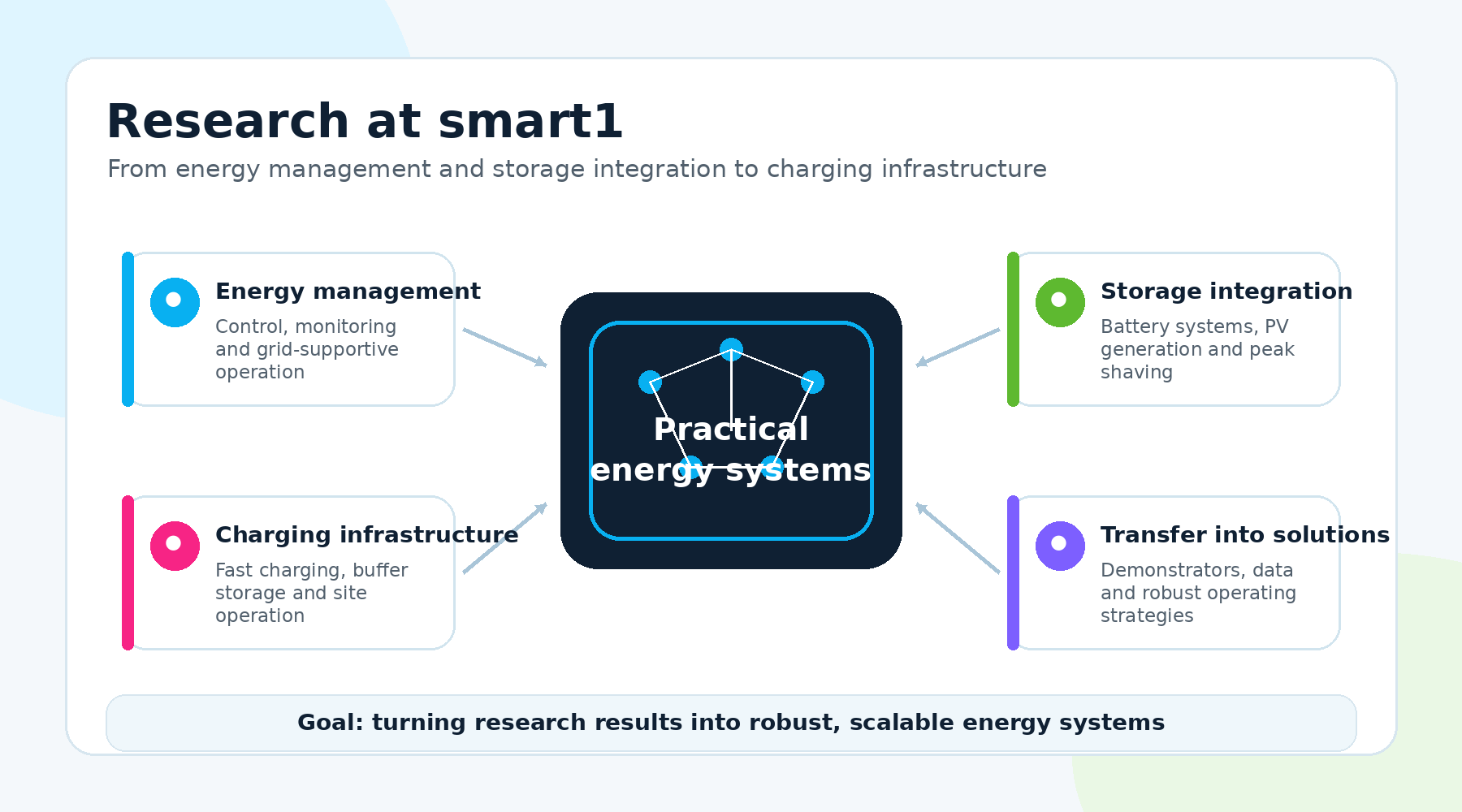
smart1 connects research with practical implementation: energy management, storage integration and charging infrastructure are developed with the goal of turning pilot projects into robust solutions for real operating sites.
What we work on
Our research focuses on energy systems that are technically resilient, economically meaningful and understandable in operation. The emphasis is on applications with renewable generation, battery storage, load management and charging infrastructure.
Energy management
Control strategies, monitoring and operation of decentralised energy assets.
Storage integration
Integration of battery systems for self-consumption, grid relief and peak shaving.
Charging infrastructure
System design for fast charging, buffer storage and resilient site concepts.
Selected research projects
HochNaB
High-voltage system based on sodium-ion batteries
The HochNaB project examined a post-lithium storage system for stationary electrical energy storage. The focus was on high-voltage solutions based on sodium-ion batteries as a safe, reliable and environmentally friendly alternative for home and industrial applications.
- Duration: 01 April 2019 – 31 March 2022
- Focus areas: system integration, safety and application scenarios
- Goal: strengthening market readiness and practical use of stationary storage solutions
ecoLEPus
Second-life batteries for high-power applications in charging infrastructure
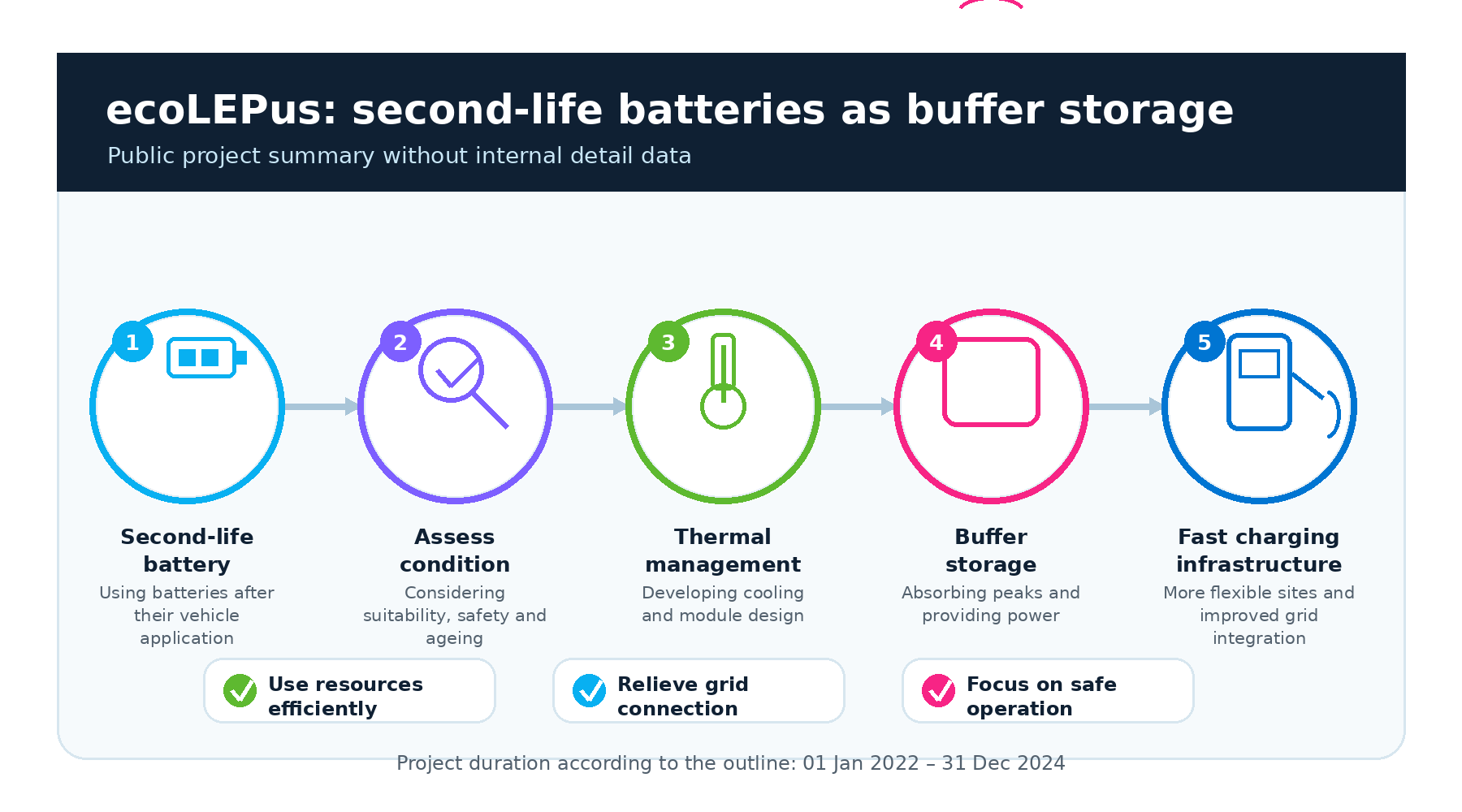
ecoLEPus explores how used vehicle batteries can continue to be used as second-life batteries in demanding applications. The publicly suitable project description focuses on using these battery systems as buffer storage for charging infrastructure, helping to provide high charging power and reduce the load on grid connections.
- Duration: 01 January 2022 – 31 December 2024
- Focus areas: condition assessment, thermal management, module design and safe operation
- Goal: using resources more efficiently and integrating fast charging infrastructure more flexibly
Note: The ecoLEPus section intentionally only uses project information suitable for public communication. Internal contact data, budget figures, detailed work-package information and confidential project data are not published on this page.